Fish

Snail

Butterfly

Butterfly

Nag

Dwarf

Dinosaur

Spider

Rabbit

Camelopard

Kitten

Elephant

Dog


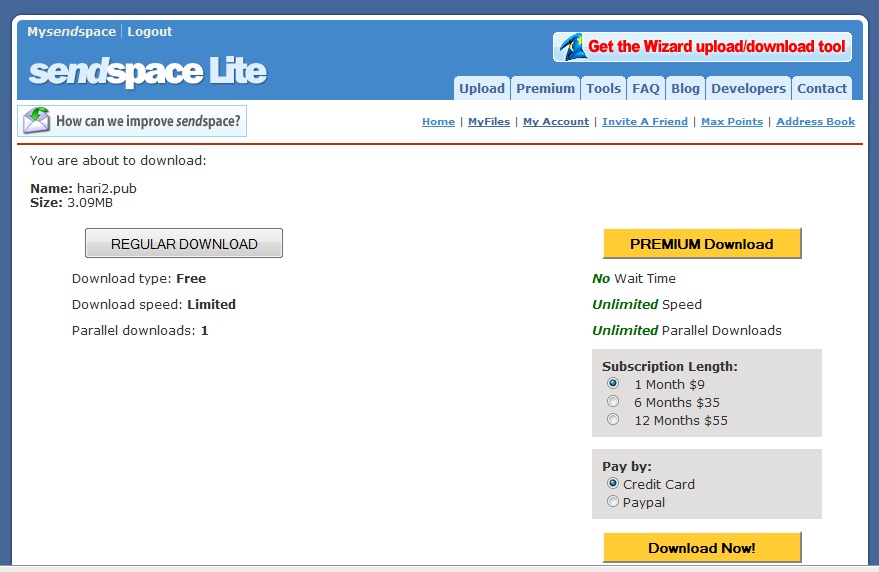 Klik pada ikon Regular Download. Kemudian paparan di tetingkap monitor anda akan menunjukkan paparan seperti di bawah.
 Seret paparan anda hingga ke bahagian paling bawah di mana anda akan melihat anak panah berwarna merah yang akan berkelip-kelip. Klik pada bahagian Download dan anda akan ditanya sama ada mahu membuka terus dari program atau menyimpannya ke dalam komputer. Sila pilih untuk menyimpan bahan ke dalam komputer supaya memudahkan anda membuat penambahbaikan pada bahan tersebut.
 Selamat mencuba dan berjaya...


Yield: 10-12 Pancakes
Sour Milk Pancakes:
Blueberry Pancakes:
Apple Pancakes:
Ginger ‘n’ Spice Pancakes:
Banana Pancakes:

1 1/4 cups flour
2 tsp baking powder
1/2 tsp salt
1 TBS sugar
1 1/4 cups milk
4 TBS vegetable oil
2 egg yolks, well-beaten
2 egg whites
Yield: 4 to 6 Servings
Bacon Waffles:
Cheese Waffles:
Chocolate Waffles:
Corn Waffles:
Apple Waffles:
Blueberry Waffles:
Banana Waffles:
Early Education
This website (owned by the Passamaquoddy Children's Centre), features many tips and activities for preschoolers.
ChildFun
Billed as, "The ultimate education resource center for parents, pregnant women, and child care / daycare providers."
Childcare
Detailed information for daycare providers that includes lesson plans, activity ideas, resources, and numerous links.
Early Childhood.Com
A place for getting advice from experts in the early childhood field, expanding your collection of creative projects, and sharing ideas and questions with the early childhood community.
EdnoLand.com
EdnoLand.com is an extension of the services offered to parents and teachers of preschoolers attending the EdnoLand program (available in many kindergartens in Singapore and Malaysia).
Idea Box
Early childhood education and activity resources. This site features activities, crafts, music, games and more.
Lil Fingers
Lil' Fingers Storybooks is a computer storybook site for toddlers. Parents and children are encouraged to click from page to page reading and looking at colorful drawings (some of them even move!).
Live and Learn
The Live And Learn web site includes The Learning Pages, which has information and resources for teachers, daycare providers and concerned parents.
National Institute on Early Childhood Development and Education
The design of the page encourages collaboration at all levels -- families, educators, communities, policy makers -- in an effort to assist all children.
Natural Learning
Early childhood workshops, children concerts, make-it take it sessions, and keynotes. A valuable educational resources for teachers, child care providers, as well as parents.
Perpetual Preschool
This site was created to celebrate the creativity and dedication of all those who contribute to the perpetual education of young children.
Pre-K Smarties
Parents' resource for teaching babies, toddlers and preschoolers at home with tips for early reading and educational toys.
Read With Me
A Guide for Student Volunteers Starting Early Childhood Literacy Programs
 Langkah 1: Paparan ini akan kelihatan sebaik sahaja cd dimasukkan ke pemacu cakera padat.
 Langkah 2: Di pemacu cakera anda akan melihat keseluruhan file utama yang terdapat di dalam cd.
 Langkah 3: Klik pada ikon Main.
 Langkah 4: Anda akan melihat paparan file yang ada di dalam file Main. Klik pada ikon "start"
 Langkah 5: Paparan berikut akan keluar dan anda akan dapat mendengar lagu tema siri Cerlang Minda Prasekolah. Sekiranya ingin melangkau hanya klik pada ikon "Langkau" di bahagian bawah kanan skrin komputer.
 Langkah 6: Paparan utama akan muncul. Klik pada ikon Masuk.
 Langkah 7: Klik pada ikon Tidak kerana anda baru sahaja membuka cd ini. Ikon Ya hanya diklik bila anda ingin menyambung aktiviti di mana anda telah membukanya terlebih dahulu.
 Langkah 8: Paparan menu utama di mana anda boleh memilih aktiviti yang ingin anda lakukan bersama anak-anak / murid-murid.
 Langkah 9: Klik pada ikon Keluar jika anda ingin menamatkan aktiviti.
 Langkah 10: Inilah paparan akhir perisian ini. Mereka yang tertera namanya di sini merupakan insan-insan yang telah banyak membantu saya menyiapkan projek ini.
Assalamualaikum
Kali ini saya ingin mengutarakan entri yang cukup penting bagi menambah pengetahuan kita bersama. Yalah manalah tahu kalau satu hari kelak anda akan dilantik menjadi pemimpin dan semestinya anda ingin menjadi pemimpin yang baik...
Tun Dr. Mahathir menggariskan tujuh kualiti untuk menjadi pemimpin yang baik, iaitu;
1. Mentaliti
2. Kemasyarakatan
3. Moraliti
Antara ketiga-tiga ciri yang dinyatakan, moraliti adalah yang terpenting untuk menilai seseorang pemimpin sama ada baik atau buruk, berkesan atau tidak, boleh bertahan lama atau tidak.
Pemimpin memerlukan juga sikap tertentu untuk mempengaruhi orang lain. Perkara yang paling penting ialah pemimpin harus mempunyai pengertian dan tanggapan yang tajam terhadap individu-individu yang saling berurusan dengannya. Selain daripada itu seorang pemimpin juga harus mempunyai:
Selain itu, sekiranya seseorang itu ingin menjadi pemimpin yang baik, dia hendaklah mengamalkan perkara-perkara yang diketahui, dilihat dan diterima sebagai baik:
Melalui perbincangan mengenai ciri-ciri pemimpin berkesan di atas, beberapa kesimpulan dapat dibuat. Diantaranya ialah kepimpinan ialah perlakuan seseorang yang boleh menggerakkan orang lain untuk berfikir, merasa, bertindak dengan cara-cara tertentu. Dalam hal ini seorang pemimpin harus mengetahui keperluan dan motif orang-orang yang berkerja dengannya dan harus menitikberatkan pencapaian matlamat kumpulan. Dia juga harus berjaya mengekalkan kekuatan yang ada pada kumpulannya untuk menyelesaikan masalah dan mencapai matlamat masa depan.
Seseorang pemimpin boleh menonjolkan kepimpinannya hanya melalui penglibatannya dalam kumpulan. Dalam kumpulan pula kekerapan interaksi bersama kakitangan membolehkan keberkesanan kepimpinannya. Kalau seorang pemimpin sentiasa “bersembunyi” dalam biliknya dan tidak mempunyai masa untuk berinteraksi dengan kakitangannya, maka kepimpinannya kurang berkesan.
Kepimpinan bukan bergantung sepenuhnya kepada jawatan. Status jawatan yang disandanghanya satu daripada punca potensi kepimpinan. Kejayaan kepimpinan adalah fungsi kedua-dua kuasa formal melalui jawatan dan penerimaan orang-orang bawahan secara tidak formal yang bukan kerana jawatan.
Sumber: http://kulanzsalleh.com/ciri-ciri-pemimpin-yang-baik
Thinking games are a great way to build your child's problem-solving, memory, and reasoning skills in a fun, engaging way. These games can be played with as few as two players and as many as a classroom. They are completely portable and limited only by your imagination!
These games can be played with a relaxed, non-competitive pace that naturally teaches children turn taking, listening for detail, cooperation, and valuing contributions of others.
Bumble Bee, Bumble Bee is a thinking game many of us played in early childhood. You may have learned it by other names, but the concept is the same.
The object of Bumble Bee, Bumble Bee for young children is to identify an object in the area that another player is thinking about. One player chooses an object and gives other players a clue about its identity. Players take turns guessing what the object might be, and they continue until it is identified.
For preschoolers and early primary students, the clue is usually the color of the object. The game can be made more complex by using sizes, shapes, textures, or other ideas you may have in addition to colors.
How to Play:
Another rhyme you may remember is: "Riddle, riddle Marie, I see something that you don't see, and the color of it is (say the color)."
This is especially crucial for a dyslexic child. But what does it mean?
Using a multisensory teaching approach means helping a child to learn through more than one of the senses. Most teaching in schools is done using either sight or hearing (auditory sensations). The child’s sight is used in reading information, looking at diagrams or pictures, or reading what is on the teacher’s board. The sense of hearing is used in listening to what the teacher says. A dyslexic child may experience difficulties with either or both of these senses. The child’s vision may be affected by difficulties with tracking, visual processing or seeing the words become fuzzy or move around. The child’s hearing may be satisfactory on a hearing test, but auditory memory or auditory processing may be weak.
The answer is to involve the use of more of the child’s senses, especially the use of touch and movement (kinetic). This will give the child’s brain tactile and kinetic memories to hang on to, as well as the visual and auditory ones.
An example
An example will make this clear. The majority of dyslexic children experience confusion over the direction of ‘b’ and ‘d’. They can both be seen as a stick with a circle at its base. But on which side does the circle sit? A teacher might give the child a tactile (touchy/feely) experience of the letter ‘b’ by getting the child to draw the letter really large on the carpet. This will involve the child using their arms, their sense of balance, their whole body. They will remember the day their teacher had them 'writing' on the carpet with their hand making this great big shape, and can use that memory the next time they come to write the letter.
Some teachers purchase letters made out of sandpaper so that the children can run their fingers over the letter ‘b’, giving them a strong tactile memory. The thought of it sends a shiver down my spine!
Writing the letter ‘b’ in cursive handwriting on paper and with a big movement in the air puts a quite different slant on this letter. The letter starts on the line and rises to begin the down-stroke: there is nowhere else to put the circular bit but ahead of the down stroke.
Yet another way to give a strong tactile memory of ‘b’ is to make the letter out of plasticine, play-dough or clay.
A commonly used ‘trick’ to remember the direction of ‘b’ and ‘d’ is to show the child the word ‘bed’ on a card. This word begins with ‘b’ and ends with ‘d’, so that if you draw a bed over the letters, the upright part of ‘b’ will become the head of the bed, and the upright part of the ‘d’ will become the foot. You can draw a child lying on the bed to complete the picture. This gives a strong visual memory for the child to use each time the letter has to be written.

You can also show the child how to hold up their index finger on each hand, with the thumb and second finger touching, making the word ‘bed’, but without the ‘e’. If they learn to do this, they can make this shape discretely with their fingers each time they need a reminder in class.

The net result of these activities will be that a child has a visual memory from seeing the letter, an auditory memory from hearing the sound it makes, a tactile memory from writing the letter in cursive handwriting, in the air, and from touching the sandpaper letter, and a kinetic (body movement) memory from having drawn the letter really large on the carpet. Altogether a multisensory experience!
This tried and tested method has been used successfully for a long time, and its success lies in the fact that the dyslexic child is not limited to visual and auditory experiences but can make use of other areas of the brain in trying to establish clear memories of letters, words and numbers that are difficult to remember.
Lagi...
We all know how common it is for children just beginning to read & write to have “b” “d” confusion. Here are a few fun activities to do with the students that will help many of them remember the difference.
Song
“A line and circle is the letter “b”.
A circle and a line is the letter d.”
(PBS, Word World, 9/14/09)
Sing the song as you write each letter on the board.
Then, students sing the song as they write the letters.
After practicing “b” and “d”, as you write the letters make the word “bed”. Explain that the “b” is like a pillow in the bed. (See the word art below of “bed”).
Have you ever seen the PBS cartoon, Word World? They have an episode about “b” and “d” confusion entitled, Bed Bugs. If you are able to record Word World and keep it on hand for specific lessons, it can be a fun way to supplement classroom lessons. I really wish they would offer an online archive of these episodes under specific lesson plan categories, such as “b” “d” confusion. They do have an episode about “b” “d” confusion. The characters actually made a bed (out of the letters) and sang the above song. Until an online archive of episodes is offered to teachers, recording episodes and keeping them in your classroom video library is a great idea.
They do offer online Word World Educational Games. I highly recommend saving this link for your students and using it during computer lab. Studying the games and assigning specific games depending on reading and writing assessment results can really help catapult students to the next level of learning. You could even assign specific games for homework! It may be helpful to put this link on your classroom website (if you have one).
You can make words into art. For example, the word “cat” can actually become a cat.
Here’s some “b” & “d” word art with sketches of each one:
When I was a child, I had learned how to make the cat. So, when I saw the Word World cartoon with my daughter it brought back memories of creating “word art”.
It will be fun to see if the kids are able to come up with some of their own words, too.
Help students identify lowercase letters and learn to correctly print them with these textured tracing cards. Green dots show where to begin tracing and red dots show where to stop. Directional arrows teach correct letter formation.

If you have an idea about teaching “b” “d” or word art, feel free to share your ideas in the comments section.
Dan lagi...
Resolving b and dConfusion
The first is a strategy forresolving confusion between the letters b and d, a very common problem among both young and disabled readers. This material has been extracted from the full Stevenson Program but can be used separately. Click here.
The Group Game
 The second item, the Group Game, is an excellent strategy for making sure that all students in a reading group are paying attention even if only one is reading aloud. Again, this strategy is built into the Stevenson Program, but could be used in any class. These resources will give you a small taste of our teaching techniques. Click here.
Additional Decoding Tests for Progress Monitoring.
 These tests are designed to supplement the Mastery/Management Tests. They provide additional opportunities to assess the decoding skill of your Stevenson students. Currently many schools require teachers to monitor the progress of each student frequently to determine if a particular reading intervention is working, and these easy-to-administer tests will significantly increase the frequency with which assessments can be made. They are free, but only teachers who have already acquired the Beginning Green Level or the Basic Blue Level Mastery Management Test Manual and Test Booklet are given permission to use them. They are in PDF format and can be printed and photocopied.
Transition periods are brief but very important since they often represent the moments when children lose their focus, causing the group to scatter here and there. Animating these periods can help avoid many problems. A period can be considered to be a transition only if it does not exceed 15 minutes. Any period of time longer than 15 minutes should be considered an activity. Transitions are periods of time where children must wait, with or without their caregiver if she is busy preparing the next activity.
Although we may not realize it, we spend quite a bit of time in transitions throughout the course of a day. To help you plan these periods more effectively and make them more enjoyable, here are a few suggestions.
Small piece of advice: Regularly change your material or your activities to maintain children's interest level and ensure they remain interested. Use seasons or holidays for inspiration to invent your own small games or new material. Use them only during transition periods.
A few reasons children have to wait:
Here are a few tricks which will help avoid moments of despair and make sure you are ready to keep little ones occupied at all times.
Animation games for transitions
Material which may be used for transitions only
Material used for transitions should never be available during other periods. Once a transition period ends, put it away immediately. Otherwise, children will no longer be as attracted by the material. They may be distracted and not pay attention.
You have tried all these suggestions and can't think of anything new? Let children guide you. Observe them when they are playing and listen to what they have to say. You will learn a lot about their interests. Indirectly, they will tell you what kind of activities they would enjoy!
0 to 2
"I Can Do That!" by Carla Poole
"Wave bye-bye, Kate!" Kate's teacher enthusiastically calls to hey as the nine-month-old leaves the center with her mom. Kate looks pensive for a moment and then smiles proudly as she shakes her dimpled arm. Kate feels good about responding to one of her first direct requests. More importantly, her expectations of the world are beginning to take root. Cooperative and satisfying interactions are an important part of her daily life.
Jacob, a lively 12-month old, is eager for his teacher to continue playing Pat-a-Cake, so he reaches over and pushes her hands back together. Feeling quite masterful, he gurgles with delight as she follows his cue and keeps on clapping. Jacob is experiencing "being heard"-a necessary precursor for following directions from others.
Starting Simple
As the junior toddler turns 18 months, her thinking skills begin to change dramatically. She understands more words and can hold onto a mental image of something even when it is out of sight. Her capacity for deferred imitation, when she remembers how an event happened in the past and purposely repeats it, is growing stronger. As a result of this mental growth spurt, she will soon be able to follow simple directions. Nineteen-month-old Julie, for example, retrieves an object from another room when her teacher asks her to. Her teacher knows not to expect Julie to fetch her coat from the hallway, however, when she's in a rush to go out. Toddlers need to assert themselves while learning to be more independent. It takes time to build partnerships that include give and take.
By 24 months, most toddlers can follow two- and three-step directions. Ellen understands when her teacher says: "Please get the doll and blanket and put them in your cubby." In reality, however, it's best to expect toddlers to respond to your request only 50% of the time at most!
Encouraging Cooperation
Thankfully, toddlers possess some characteristics that encourage cooperation, including an awareness of adult expectations: "Uh-oh!" Julie might say when she spills her juice cup. Toddlers are attracted to the grown-up world and enjoy adult approval. They seek challenges but will nevertheless shy away from doing something that seems too difficult. Sometimes what appears to be unwillingness to comply is just a toddler feeling overwhelmed by a request that is too complicated. Your tone of voice influences how toddlers respond to you. Being enthusiastic and respectful when giving directions usually works best. If an honest explanation doesn't convince Jimmy that your request is important, you may have to gently guide him through certain steps. Then express your approval of his efforts. Taking a playful approach with toddlers will help them learn that doing things with you and for you feels good.
What You Can Do
3 to 4
Learning by Doing by Susan A. Miller, EdD
"Anna, please put your crayons in the box. Then put the box away on the art shelf." Anna's teacher speaks directly to her and makes her directions clear and easy for the three-year-old to understand. As a result, Anna responds by happily putting her materials away. Like Anna, most three-year-olds have no trouble following a two-part direction.
By age three, preschoolers have a receptive or understood vocabulary of a little over 1,000 words, to which they add at least 50 more words each month. But children this age are still learning how to listen and pay attention to what they hear. After Keith's teacher announces to the three-year-old group, "Get your coats and line up at the door," she is surprised when she sees Keith standing at the door-without his coat! Because Keith was not focused when she first started speaking, he didn't hear or understand the complete direction. All he heard was, "Line up at the door," which is exactly what he did!
Offering Choices
Threes respond best to simple choices rather than what they perceive as being commands. Scott likes it when Mrs. Keyes asks him, "Do you want to put the blocks on the cart or place the toy trucks in their garage?" Malin enjoys making a decision when her friend Tess wants to know, "Can you diaper our baby, or are you going to fry the pancakes for the daddy?"
Fours can respond to three-part directions if they are delivered in the proper sequence. Jamal yells excitedly to his firefighter friend Owen: "Quick! Grab a hose, put out the fire, and rescue the dog from the house!" Easily able to follow these instructions, four-year-old Owen eagerly seeks approval from his friend and teacher. "Look what I did! I saved the dog!"
Watching and Doing
Some preschoolers are considered to be "field sensitive." They need directions and like to be told exactly how to do something. For example, Andrea asks: "How do I make Liza a birthday card?" She is happy when her teacher demonstrates how to fold the paper while verbally explaining each step. After observing another friend fold her card, Andrea finally feels comfortable trying it on her own.
Other young children may be more "field independent." Carlos is thrilled when he sees small paper bags, yarn, paper scraps, scissors, and glue on the table. "Puppets," he says excitedly. "I can make lions and tigers for the jungle!" Then he sits down and immediately begins to glue some yarn. Field-independent Carlos doesn't need or want directions as he jumps right into activities and explores things his way.
Preschoolers' individual learning styles also influence how they receive, understand, and follow directions. Analytic children enjoy having directions broken down into small parts step-by-step; global learners need to see or understand the whole picture. A child who learns best visually says, "Let me see how to do it," while the auditory child says, "Tell me the way to do it," and the tactile child states, "Let me do it."
It's important to give children directions that relate to their learning styles and involve open-ended questions and two-way communication.
What You Can Do
5 to 6
Practice, Practice, Practice! by Ellen Booth Church
"Can you touch your nose, stick out your tongue, and turn around?" Ever playful Debbie is getting her friends to try different funny movements while they wait for the bus. As her teacher observes this spontaneous interplay, she notices the children who can do all three parts of Debbie's direction and those who get stuck on the first or second action. She notices, too, that some children can follow the directions after repeat tries. Best yet, they are all laughing and having fun-always good ingredients when learning new skills.
One Stop at a Time
Have you ever tried to sub your head and pat your stomach at the same time? That feeling of frustration that many of us get is akin to the experience young children have when they are learning to listen to, understand, and follow directions. It's almost as though there's a short circuit in the process that keeps them from absorbing all the information.
Happily, just like the Head-and-Stomach game, it is a skill that can be learned through conscious step-by-step practice. (Some children learn best through repetition.) And for fives and sixes, practicing steps for a new skill is fun. Children this age have learned the value of listening in life and are becoming good at it-even though it might not appear that way at times!
Learning to Listen
Gideon is calling over the immense block building he is creating with his friend Joya, who is looking slightly puzzled. "Didn't you hear what I just said?" Gideon asks. "Put the top block to the right of the cylinder and above the arch."
Listening is the core ingredient in a child's ability to follow directions. However there are many parts to the listening process. In this situation, Joya not only has to hear what is being said (auditory acuity and perception), she also has to understand the meaning of the sounds and words (auditory comprehension) and interpret them into a sequence of events she must then actuate. When looked at in this detail, it's no wonder that we have such a hard time getting children to follow our directions!
First Things First
"Don't forget to park the wagon after you pick up the toys and close the gate!" the teacher says to Matthew-who responds with a quizzical look. What do I do first? he wonders. Even though fives and sixes have developed a more sophisticated vocabulary and expanded listening skills, they still need to have the steps of a direction stated in a natural order. We cannot assume that children can transpose a direction into chronological order.
One way to be sure that children understand a direction is to ask them to recite the steps back to you in order. This not only helps them to hear the direction again, but it utilizes the skill of speaking to reinforce the process of listening and doing.
What You Can Do
Source: http://www2.scholastic.com/browse/article.jsp?id=3745711
Dunn and Dunn has learned that optimal times for learning fall into four categories.
So, in the morning there is a possibility of 40% of the students at their peak. In the afternoon, 40%. That leaves a possibility of 40% of students learning best when school is no longer in session. So, the long standing opinion that reading and math must be taught in the morning may not be valid.
Dunn and Dunn also learned that student energy is highest right after lunch. Good to know. However, teacher energy is lowest after lunch. This combination results in active students with tired teachers. Statistics show that discipline problems are the greatest immediately after lunch.
As students learn which time is best for them, they can utilize that time for optimal gain. Students that know they are night owls, may do the bulk of homework at that time. Afternoon students should probably study when they get home from school. Morning students are the ones that can get up an hour early and review information one more time before a test.
Source: http://educationalissues.suite101.com/article.cfm/best_time_of_day_to_learn


